
The Gary Rydstrom Moment
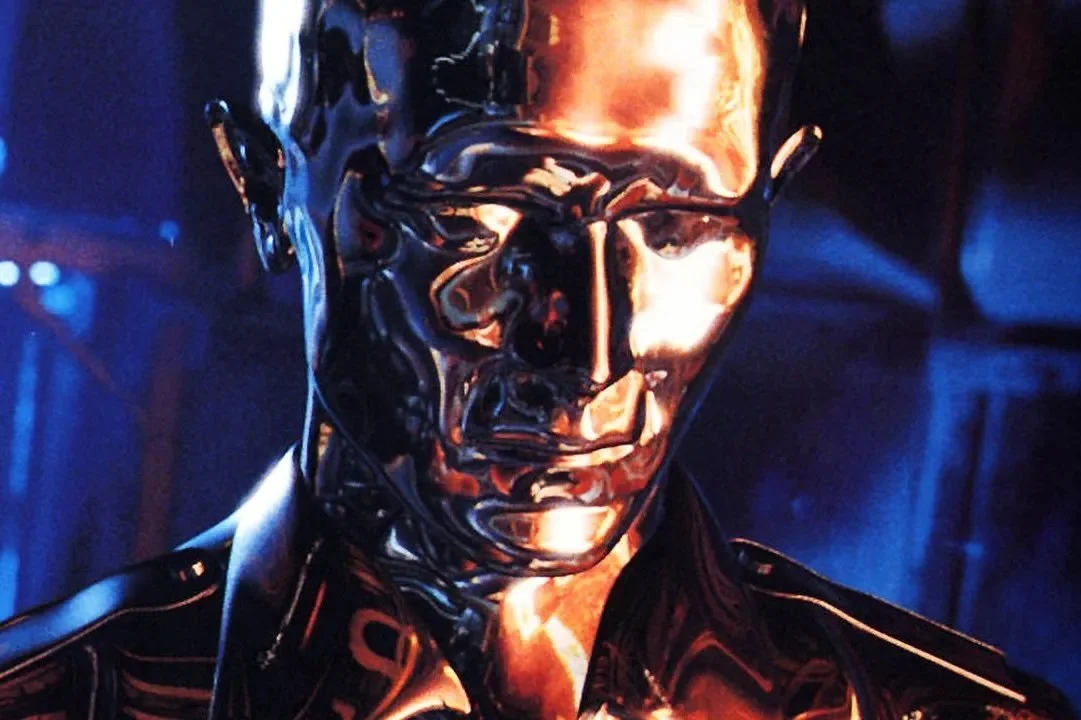
Every sound designer knows the story.
Gary Rydstrom is in his kitchen, feeding his dog. He opens up a can of dog food, flips it upside down, and slowly it slides out with that wet, viscous, oozing sound as it makes its way against the metal of the can. In that moment, he hears the T-1000 from Terminator 2. The liquid metal morphing sound that has eluded him for weeks. After countless attempts in the studio, trying different recordings, and source material, and edits, he suddenly hears it here in the kitchen. It's exactly what he's been searching for. The shape-shifting liquid metal robot moving through bars and surfaces.
The signature sound of one of the most iconic visual effects of the 1990s originated here in a flash of recognition, in his kitchen, and all from a dog food can.
The story has been told at every panel, in every interview, in every classroom for thirty-five years. We never get tired of it. And I think I finally understand why.
It's not because it's clever (although it is pretty damn clever). It's not because it's funny (kind of funny actually).
It's because every sound designer alive recognizes the moment.
We've all had a smaller version of it. The tiny flash where some sound in your environment, some texture you weren't even paying attention to, suddenly aligns with a problem you were trying to solve. The world hands you something and your ears recognize it.
I want to give that moment a name. I'm going to call it a Gary Rydstrom Moment.
Here's what defines one. You've been working on a scene. You know what it should sound like in your head but you can't find it in your library. You've tried every keyword. You've previewed dozens of files. Nothing is hitting. So you walk away. You go to the kitchen. You pour a coffee. You pet the dog. And in that moment of not searching, something arrives. A revelation. A flash. A "wait, what if it was that?" And you walk back to your station and try it and it works.
That's a Gary Rydstrom Moment.
Three things I've come to believe about them.
One. They are the truest expression of what sound design is. We talk about sound design like it's recording, but it isn't. It's translation.
The dog food can. The watermelon thump. The frozen cabbage. The celery stalk. The chamois on linoleum. The weird ceramic whistle thing you've had since high school suddenly becomes the voice of a wind spirit. Every one of those is the same moment.
The craft has always been about recognizing that this sounds like that, even when they look nothing alike. The Rydstrom Moment is when that recognition lights up in real time.
Two. They cannot happen in a spreadsheet. They only happen when you're relaxed enough to listen without filtering. When you stop parsing filenames and start hearing again. The reason they show up in the kitchen and not at your desk is because the desk is full of cognitive load. Keyword fields. Filter menus. Metadata tags. Notes from the director. Schedule pressure. None of that brain is available for a flash of recognition. You have to leave the desk to get the moment.
Three. They are getting rarer. Not because we're worse at our jobs. Because we have more libraries, more files, more metadata, more tools, and somehow more friction between us and the actual sounds. We've spent thirty years digitizing and tagging our way to enormous catalogues we can barely hear anymore. We read our libraries instead of listening to them.
Rydstrom didn't read his kitchen. He listened to it.
I think the next era of sound design tooling has to be about getting us back into that mental state. Not finding faster. Listening better. Less typing. More hearing. Fewer filters and plugins. More flow.
Because everyone keeps building tools to make us faster. Nobody is building tools to make us more creative. The Rydstrom Moment is creativity. That's the gap.
Your turn. What's your Gary Rydstrom Moment? The one that lives rent-free in your head, the sound you're proudest of that came from somewhere absurd.